If you are planning to travel to Italy from Nigeria, whether you are going for school, work, or to eat the real Italian pasta, identifying the visa type you need is the first step, as it will save you from stress and waste of money.
With an Italian visa, you will have access to 29 other European countries, which means your passport will start seeing the world and not your drawer.
In this guide, you will understand the types of Italy visa available, Italy visa requirements, the cost of a Schengen visa for Italy, and the visa application Italy from Nigeria.
Key Takeaways
- To apply for an Italy visa, you need to register on the TLS Contact website, gather your documents, book an appointment in Lagos or Abuja, submit biometrics, and wait up to 15–45 working days for a decision.
- Italy is a Schengen country, so one visa gives you access to 29 European countries, but Nigerians must apply through the Italian embassy if Italy is their main destination.
- There are two main visa types available in Nigeria: the Schengen visa (Type C) for short stays up to 90 days, and the National visa (Type D) for longer stays, such as work or study.
- The Italy visa fee starts at €90 for adults, with extra service charges from TLS Contact bringing the total cost to over ₦200,000 depending on the exchange rate.
What is a italy Visa application in Nigeria?
A visa application for Italy is the process of requesting permission to enter Italy as a Nigerian citizen, and it involves submitting documents, paying a fee, and attending an appointment.
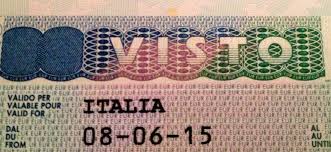
If your application is approved, a visa sticker is placed in your passport.
Can I travel to Italy with a Schengen visa?
Yes, Italy is a Schengen country, which means you can enter Italy with a Schengen visa issued by other European countries, but there are rules.
If your main destination is Italy, you should apply through the Italian embassy according to the Schengen rules.
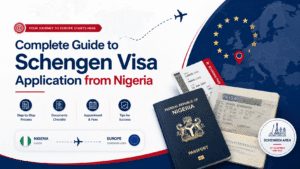
Step-by-step Italy visa application process in Nigeria.
The process of a visa application to Italy is very similar to a Schengen visa application.
Step 1: Check Eligibility and Visa Type
You have to determine if you need a short-stay or a long-stay visa.
Step 2: Register and Gather Documents
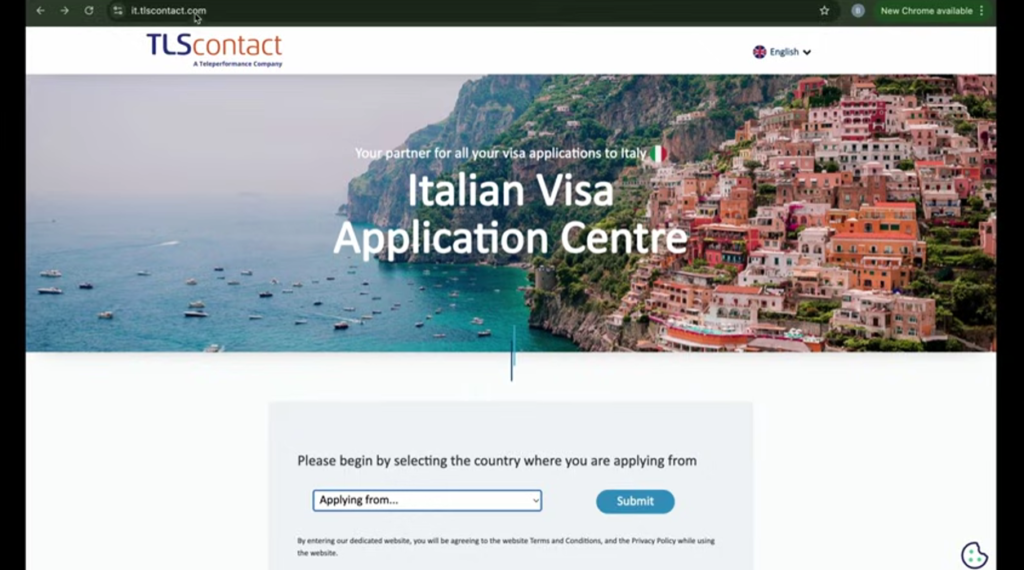
Go to the TLS Contact website and create an account online on TLS Contact. Download and fill out the correct (Schengen VIDEX form for Type C and National form for Type D), then gather your documents according to your visa type.
Step 3: Pay Fees and Book an Appointment
Book an appointment with the TLS Contact Abuja or Lagos, for which you will be required to pay a non-refundable service fee (₦20,000–₦30,000) online during registration.
Step 4: Submit Application and Biometrics
Arrive early to your visa application centre (Abuja or Lagos) along with your documents, passport, and fee receipt, then TLS verifies your documents, captures your fingerprints, and photo. After that, you pay your visa fee, no interview usually, but the embassy may call.
Step 5: Processing and Tracking
Track your application through the TLS Contact portal, and your visa processing time should take 15 working days for the Type C and up to 45 days for the Type D
Step 6: Collect your Passport or receive it by Courier
You will be notified to come pick up your passport (or pay the courier fee ₦5,000–₦10,000). If denied, you can appeal within 60 days or reapply.
Types of Italian visa Available to Nigerians
An Italian Schengen visa application in Nigeria depends on the purpose. For example, if you want to work in Italy, you have to apply for a work permit visa italy
- Schengen Visas (Type C):
This covers short stays up to 90 days in any 180-day period across the 29 Schengen countries, including Italy. The types include;
- Tourist or Visitor Visa
- Business Visa
- Airport Transit Visa
- Medical Treatment Visa
- Cultural/Sports/Religious Events Visa
The Schengen travel insurance is valid across all 29 Schengen countries for your full trip.
- Long stay Visas (Type D):
They are for long stays of over 90 days in Italy, are issued by the Italian Embassy, and allow you to apply for a residence permit if you meet the criteria.
These encompass;
- Student Visa
- Empowerment Visa
- Job Seeker Visa
- Freelancer/Self-employment Visa
- Family reunification
The visa requires the normal Schengen travel insurance at first, then another insurance for your whole stay in Italy.
Italy visa requirements for Nigerian citizens
Here are the Italy visa requirements for Nigerian citizens:
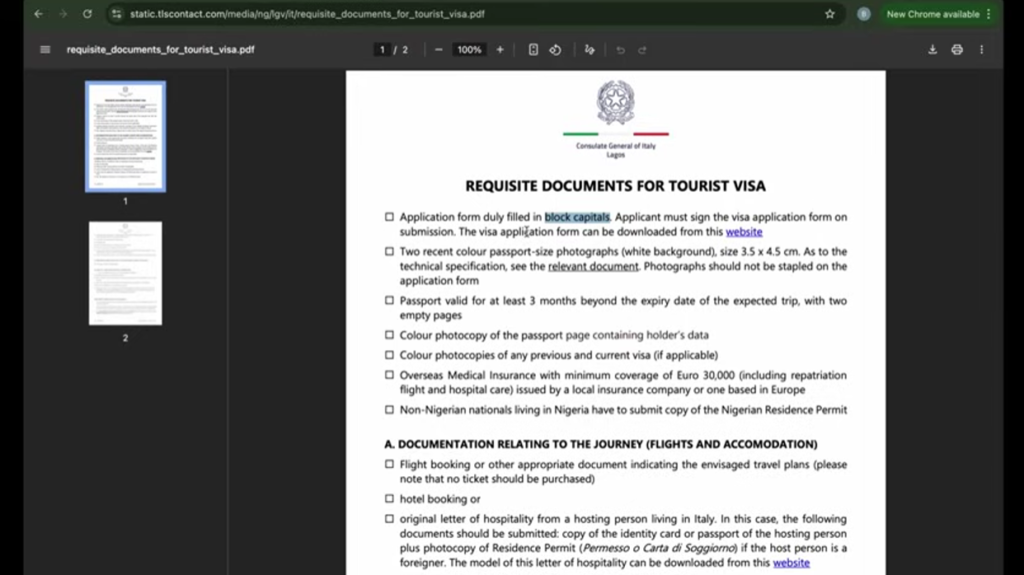
General document required for all Visa types
- Valid Nigerian passport
- Complete visa application form (Schengen or national visa, depending on visa type)
- 2 recent passport photographs
- Travel health insurance
- Bank statements
- Proof of accommodation
- A return trip reservation
- Proof that you will return to Nigeria
- Cover letter
Other Italy visa documents are required based on the visa type
- Schengen visa for Italy requirements or Type C Visa
✔ Invitation letter from your host in Italy (if staying with someone)
✔ Formal sponsorship declaration from your Italian host, if they are covering your costs.
- National Visa Requirements for Italy or Type D
For a student visa
✔ University admission letter from a recognised Italian institution.
✔ Proof of financial means (e.g., blocked account with at least €6,000–€7,000/year or scholarship confirmation).
✔Language proficiency certificate (Italian A2+ if required by the program).
✔Academic certificates (WAEC/NECO results, prior degrees/transcripts).
✔Accommodation proof specific to Italy (dormitory contract or rental agreement)
Work visa in Italy requirements
✔ Employment contract or binding job offer from an Italian employer.
✔ Proof of qualification recognition (Declaration of Value from Italian consulate or CIMEA verification).
✔ Italian language certificate (A2–B1 level, depending on the job).
✔ Updated CV in Europass format.
✔ Housing commitment letter from the employer or landlord in Italy. [ from prior context]
The cost of the Italian visa fee in Nigeria
The cost of a Schengen visa for Italy ranges from €90 for adults and €45 for children (ages 6–11), plus a TLScontact service charge that brings your total spend above ₦200,000.
For an Italian national visa(Type D)
Frequently Asked Questions
You have to confirm if you are eligible and also identify the visa type you need. Then create an account on the BLS contact website, download and fill out the visa application form for Italy, pay the booking fee, attend the application centre for biometrics and document submission, pay the visa fee, track your application, and collect your passport.
The Italian visa fee in Nigeria is €90 for adults and €45 for children aged 6 to 12. In naira, this is approximately ₦130,000 to ₦150,000 depending on the current exchange rate. With an additional fee, the VFS service charge, the total cost for an adult typically exceeds ₦200,000, depending on the exchange rate at the time of payment.
Yes, Italy issues Schengen visas or Type C visas for short visits to Italy.
Conclusion
By now, you will agree with me that an Italian visa application from Nigeria is easy if you follow the right steps, from identifying your visa type to understanding the requirements to completing your application; every step matters.
Now is the best time to start your application. Start today and take your first step towards making your Italy travel dream a reality.