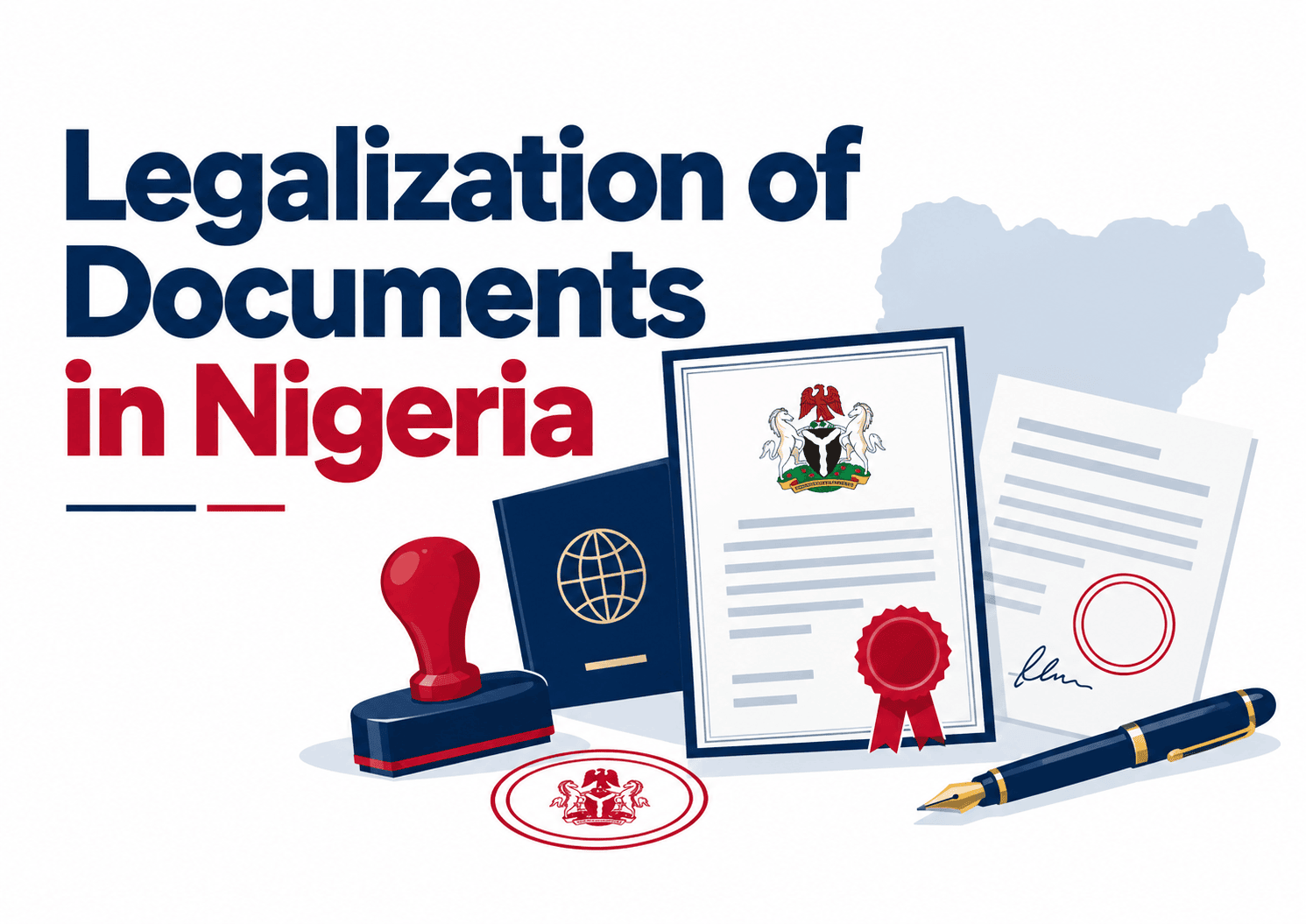
If you need to use a Nigerian document in another country, you may be asked to have it legalized before it can be accepted. This can apply to documents you need for studying abroad, getting married, working, doing business, or applying for a visa.
The process of legalization of documents in Nigeria can be confusing; document legalization is not the same as notarization or authentication. The steps and fees can also differ depending on the country. In this guide, you will learn what legalization means, who handles it, the documents you may need, and how to complete the process in Nigeria.
Key Takeaways
- Document legalization confirms that a Nigerian document, or its relevant official signatures and seals, can be accepted for use in another country.
- The process may start with notarization and authentication by the Nigerian authorities, before the final legalization by the destination country’s embassy or consulate.
- The documents, fees, and processing time depend on the document type and the destination country’s rules.
- Always confirm the latest requirements with the relevant embassy before submitting your documents or paying any fees.
What Is Legalization of Documents?
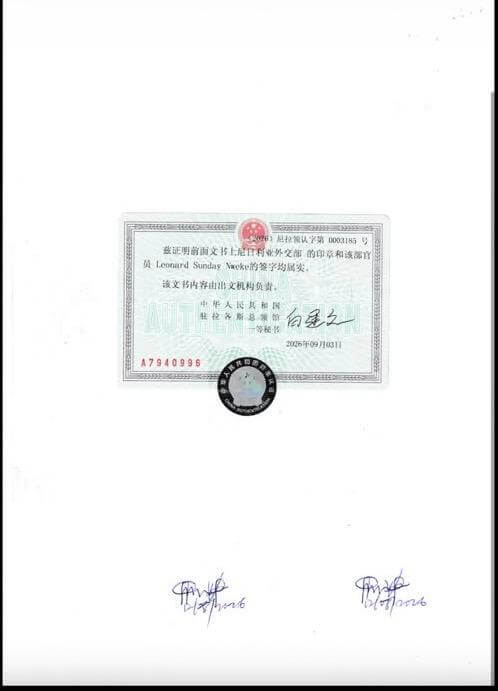
Document legalization is the process of confirming the authenticity of a document, or the signatures, seals, and official authority connected to it, so that it can be accepted in another country.
Sample of a Legalization Stamp
Who Legalizes a Document?
Legalization of a document is done by the embassy or consulate of the foreign country where the document will be used. This is the final step of making a document valid for international use.
The destination country’s embassy can only legalize your document after it has been notarized by a notary public and authenticated by the federal ministry of education (for academic documents) and the ministry of foreign affairs(MFA).
What Type of Documents Are Eligible for Legalization?
The documents requiring legalisation are grouped into educational, employment, immigration/family, and business documents:
- Educational Documents:
- Degree certificates and diplomas.
- Academic transcripts and result statements.
- Secondary school certificates, such as WAEC, NECO, and NABTEB.
- Professional certifications and licenses.
- Recommendation letters from academic institutions.
- Employment Documents
- Professional certificates and qualifications.
- Employment reference letters.
- Curriculum vitae (in certain cases).
- Police clearance or character certificates.
- Medical certificates.
- Immigration and Family Documents
- Birth certificates (must be issued by the National Population Commission).
- Marriage certificates.
- Divorce decrees.
- Death certificates.
- Affidavits and statutory declarations, including declarations of age or affidavits of spinsterhood/bachelorhood.
- International Passports.
- Commercial and Business Documents
- Certificates of Incorporation and company registration documents.
- Articles of incorporation.
- Business licenses.
- Tax clearance certificates.
- Commercial invoices and contracts
Legalization Process in Nigeria
The process of legalization in Nigeria depends on the destination country and the document type.
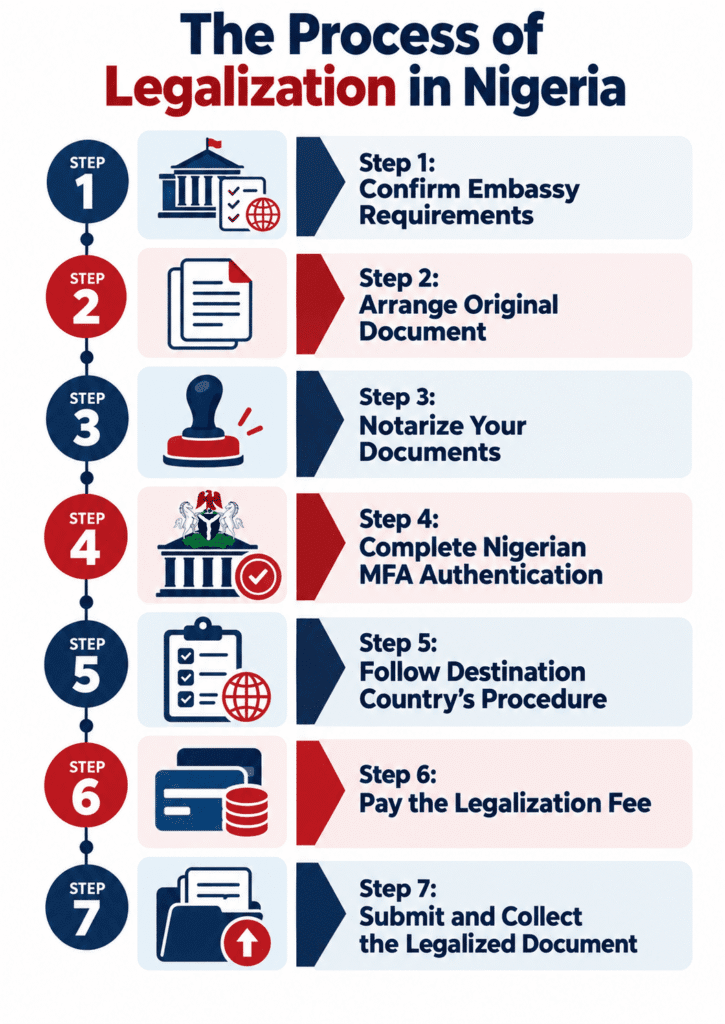
Step 1: Confirm the embassy requirements
First, you need to confirm the requirements for your destination country. You can find the information you need to know from the Embassy, consulate, or the visa center’s portal, or you can contact them directly. Every country has its own separate requirements; always confirm first.
Step 2: Arrange your original document
Get the document you need to legalize. Check that it is complete, readable, and free from errors.
Step 3: Notarize your documents
If the destination country requires notarization, take the document to a qualified notary public. A notary will verify your identity, witness your signature, or certify a document depending on the service required.
Step 4: Complete Nigerian MFA authentication
Submit your document for authentication by the Ministry of Foreign Affairs, but for your academic documents, you must take them for Ministry of Education authentication before they can be authenticated at the Ministry of Foreign Affairs.
Step 5: Follow your destination country’s procedure
After you have completed the Nigerian authentication, follow your desired country’s legalization steps. For example, some countries require that you contact them personally to find out the required documents for legalization, while some may require that you book an appointment before you can legalize your documents.
Step 6: Pay the legalization fee
Every country has its own legalization fee; confirm the correct fee and make all the necessary payments.
Step 7: Submit and collect the legalized document
Submit your documents through the correct channel for legalization and keep your application receipts or tracking details. You will be contacted to collect your documents once legalization has been completed.
Get your documents legalized
How Much Is Legalization of Documents in Nigeria?
The total cost of legalizing a document in Nigeria varies. There is no single fee that applies to every document and every country. Legalization fees can range from ₦29,000 to ₦786,000 depending on the document type. You can have a trusted agency do the process for you for ₦400,000 to ₦800,000 depending on the type of legalization. You can also book an appointment for legalization through an agent for ₦150,000.
How Long Does Legalization of Documents Take?
There is no universal timeframe for legalizing documents in Nigeria. Some applications may be processed quickly, while others may take longer because of verification requirements or delays at an embassy.
Your processing time depends on:
- The destination country.
- The type of document.
- Verification requirements.
- Appointment availability.
- Additional requests
- Delivery arrangement.
Apostille vs Legalization: What’s the Difference?
The main difference between an apostille and legalization is that an apostille is a single-step process used between Hague Convention member countries, while legalization is a longer, multi-step process required for countries like Nigeria that are not members of the Hague Convention.
Apostille vs legalization
|
Feature |
Apostille |
legalization |
|
Used by |
Hague Convention countries |
Non-Hague Convention countries like Nigeria |
|
Steps involved |
Single step |
Multiple steps |
|
Time and efficiency |
Quicker, simpler, and more streamlined |
Slower and more complex due to the number of authorities involved |
|
Valid in |
All Hague Convention countries |
Only the country that legalized it |
Note: Even if your destination country is a Hague Convention member, your Nigerian documents must still go through the full consular legalization process.
Common Document Legalization Mistakes
Ensure you avoid these common mistakes when legalizing your documents:
- Paying for notarization without checking whether it is required.
- Submitting a photocopy when the authority requires an original document.
- Ignoring spelling errors or inconsistencies in names and dates.
- Assuming that Nigerian MFA authentication automatically completes embassy legalization.
- Waiting until the last minute to begin the process.
- Using an unofficial agent without verifying the service charges.
- Failing to keep receipts and copies of the submitted documents
Frequently Asked Questions
Authentication is the process of checking the authenticity of a document or the official signature and seals connected to it in Nigeria, while Legalization is the process of completing the formalities required for a document to be accepted in another country.
Nigeria is not a contracting party to the Hague Apostille Convention, so Nigerian authorities do not issue Convention apostilles for Nigerian documents under that treaty.
Legalization does not necessarily have a general expiry date; however, the document itself or the authority receiving it may impose a validity period.
Yes, a Nigerian marriage certificate may be eligible for authentication and legalization for use abroad, subject to the application requirements.
This depends on the destination country’s requirements and the type of document. Some authorities require the original document to be authenticated or legalized before it is translated.
Conclusion
Legalizing documents in Nigeria can seem complicated, but the process becomes easier when you know which authorities are involved and what each one requires.
Start by confirming the destination country’s rules, arranging the correct original documents, and checking whether notarization is required. Also, budget for the relevant fees and allow enough time for verification or additional requests. If you need professional assistance, reach out to a visa agency today.